
Our Best Tips to Seal Your Home for Winter Saving
Want to stay warmer for cheaper this winter? Heating and cooling are typically your biggest energy costs. So, keeping that warmed or cooled air inside with sealing is an effective way to lower energy costs. Significantly, this year the NOAA predicts a strong chance of La Niña. Although this typically makes for warmer and drier than average weather in Georgia, the colder temps up north can lead to spikey natural gas rates. Furthermore, a weak polar vortex can send sudden cold snaps our way any time. So, let’s get right into our natural gas saving tips to seal out winter from your home.
7 Tips to Seal Your Home against Winter Weather
Get started with these 7 top tips to seal the cold winter air out of your house and you’ll see the difference in your natural gas bills!
1. Attic — Median house age in Georgia is over 30 years old. Therefore, if you never upgraded the insulation, you could be losing a lot of heat through the attic. Many homes just don’t have enough. So, add insulation to get to the recommended R-value of R49-R-60 and save up to 15% on heating and cooling.
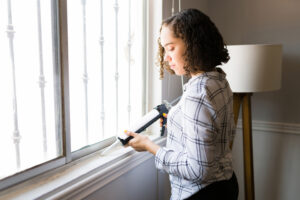
2. Windows — You can seal small gaps around windows with caulk to boost your home’s efficiency. On cold days, it’s easy to find leaks around windows just by feel.
3. Doors — Your exterior doors can be weatherproofed with weatherstripping and door sweeps. You can also up the R-value of your exterior doors with a new insulated door and a storm door.
4. HVAC Ducts — Leaky ducts let heated or cooled air escape into unused areas. In order to save on heating costs, seal duct joints and insulate the whole duct run. Use HVAC foil tape or sealant around joints. Then, insulate with a duct wrap.
5. Gaps around Exterior Penetrations — There are probably a lot more holes in your walls than you think! For example, the furnace exhaust and even your internet cable are spots to seal for leaks. You can use caulk or spray foam at most penetration points to keep out the cold air and increase your heating efficiency.
6. Outlets and Switches — On exterior walls, outlets and switches can be a source of air leaks. The fix is simple, just add a foam outlet gasket behind the cover!
7. Basements and Crawlspaces — This can be a source of air leaks if there isn’t good coverage around rim joists. This is where the foundation and framing meet. Over time as your house settles, gaps can open. The best solution here is spray foam around these points.
Amplify Your Energy Savings
Tackle these home sealing projects before the coldest days of winter set in and you are sure to lower your energy costs without sacrificing comfort. You can take your savings even further when you shop and compare natural gas plans. Find the best natural gas rates and more energy saving tips at https://www.georgiagassavings.com.